![Chipelo [Official Website]](http://images.squarespace-cdn.com/content/v1/6317a634d0ce2616830913d9/9a4fb247-6838-442a-83a2-5c9304fdb125/Chipelo+y2k_dropshadow.png?format=1500w)
CREW SPOTLIGHT: ADU
Behind every live performance is a group of talented creatives helping transform a song from something you hear through headphones into something you can actually experience. For Chipelo, one of the people responsible for bringing that crazy energy to the stage is ADU, a DMV drummer, producer, multi-instrumentalist, and artist whose relationship with music started almost as soon as he could walk.
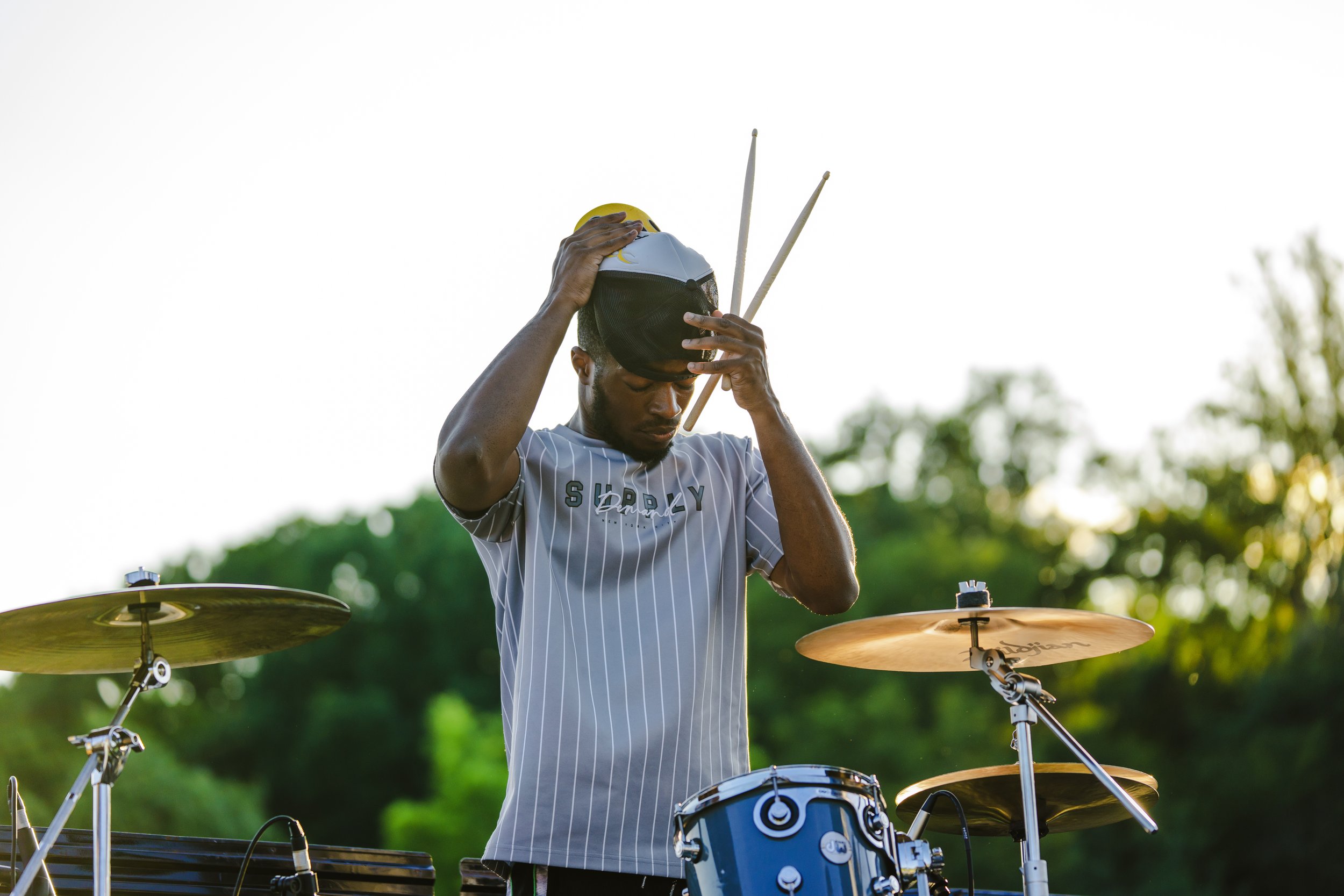
ADU performing at “Locally Grown Fest” in Maryland, August 2025.
“Hey guys, I’m ADU. I am a drummer, a music producer. I am an artist who serves other artists in live shows, studio sessions, and whatever I’m called to do.”
The Story of Adu
ADU’s introduction to music came through church, where he grew up surrounded by musicians from all across the DMV. Watching musicians he believed were talented enough to play alongside some of the biggest artists in the world gave him an early look at what serious musicianship could become. But according to his mother, his own relationship with rhythm started even earlier.

ADU recording his 3rd Studio Record while filming a docu-series for the album.
“I technically didn’t learn drums until, I guess you can say, two years old. My mom says I was just out of the womb playing drums, just had a rhythm to me.”
Drums came first, but around seven or eight years old, ADU remembers getting bored one day, seeing an upright piano in his living room, and deciding to make some noise. Eventually, that noise turned into YouTube tutorials, learning songs, understanding chords, and realizing how much of music connected across instruments. The keys led to key bass, and his curiosity kept expanding from there. Today, his musical vocabulary includes drums, keys, bass, trumpet, percussion, some guitar, production, and more.
But being able to play several instruments isn’t what ADU believes makes him ADU the Artist. That identity began developing after years of producing and recording music for other people. Somewhere along the way, he began hearing musical ideas within himself that weren’t being used by the artists around him, and instead of ignoring them, he started thinking about what his own sound could be.
“Once I started producing music for other people’s albums, recording all these records for other people, I started to hear a sound that was coming from me that nobody was using.”

ADU filming a video shoot for NPR for an artist and a recording a session on the same day at The Hangar Studio in Laurel, MD.
That realization eventually developed into ADU the Artist, but his definition of artistry extends beyond releasing records under his own name. To ADU, artistry exists in the way someone touches their instrument.
“You could hear when ADU was playing the drums. It wasn’t just some random dude playing drums. You know when ADU’s playing drums… He’s an artist on drums. He’s ADU the Artist.”
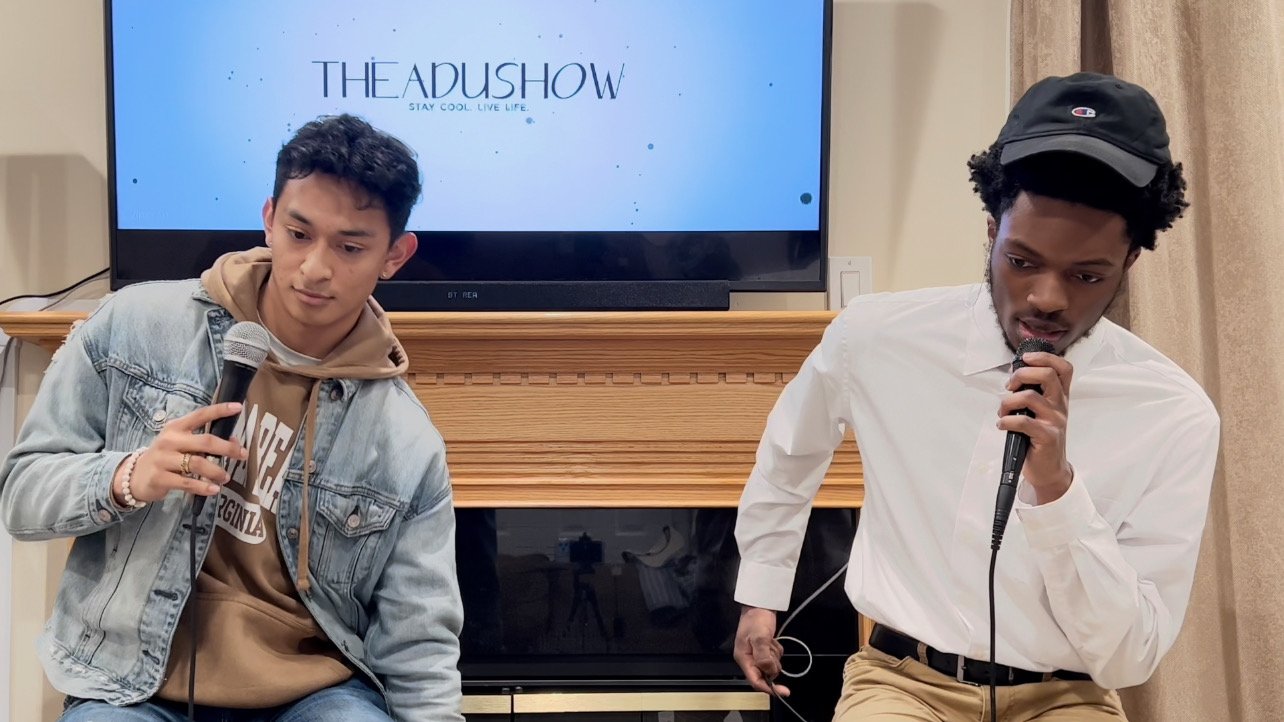
The first time Adu met Chipelo on “THEADUSHOW.”
That mentality becomes especially apparent when he explains how seriously he approaches learning someone else’s music. ADU doesn’t memorize a drum pattern and reproduce it onstage and then call it a day, he starts with rhythm and melody first, then studies the artist themselves, their cadence, vocal delivery, ad-libs and pacing to understand where his playing should fit, and then he goes for it.
“I start to dissect that song like my life depends on it at times because I really want to bring the life out of the song.”
Sometimes that process happens quickly. Other times, he says, he can spend hours listening repeatedly until he understands exactly what the record needs. The goal is for a live audience to experience the same life that originally made the song exciting, while still allowing ADU to bring his own musicianship into it.
FROM THE ADU SHOW TO THE CREW

ADU & Chipelo performing at “FiestaDC” in September of 2024.
The relationship between ADU and Chipelo actually predates much of the current Crew. ADU first discovered Chipelo through a mutual friend on social media in 2022. Initially, he thought Chipelo was just a photographer. After seeing photos Chipelo had taken at an event, ADU originally considered hiring him for photography, but then he clicked on his page and realized the photographer he thought he had found was actually a music artist. Their first meeting came later that fall when ADU invited Chipelo onto The ADU Show. After taping the episode, Chipelo stayed at ADU’s house for about another hour simply talking and hanging out.
“That’s when I knew we were going to be good friends right then and there […] he had a lot of energy. A lot of energy. Oh my gosh.”
That friendship eventually turned into a musical relationship when Chipelo asked ADU to play drums for him. ADU initially assumed it would probably be a one-time gig, maybe two, but it ended up becoming an ongoing role within the Crew. What made him say yes wasn't just the music though.
“I felt such a mutual love for music and why we do this thing of music, which made me want to say yes to play drums for him… I already felt so comfortable with him beyond music.”
ADU describes the relationship between performers with a philosophy that says a lot about how he views the Crew as a whole:
“It’s 5% what we do onstage, 95% what happens offstage.”
The performance might last thirty minutes or an hour, but everything surrounding it (rehearsing, preparing, traveling, talking, hanging out, building trust) is where most of the relationship actually exists.
“I knew that he was a great performer, but more than music, I loved his heart.”
When asked to pick his favorite moment performing with the Crew, ADU couldn't really choose one show. Instead, his answer was something that happens repeatedly. During performances, ADU will sometimes change something from rehearsal, maybe adding a new drum lick, a different hit, or an unexpected musical idea, and somewhere in the middle of performing, Chipelo will hear it, turn around toward the drums and smile.
“He’ll just start smiling at me like, ‘Oh, you—oh, you’re on that timing now? Okay, I’m rocking with you.’”
Those tiny interactions have become some of ADU’s favorite moments because they aren't rehearsed. They're two performers communicating musically in real time. His favorite offstage memories aren't necessarily one giant event either. They're what happens immediately after the shows. After everyone has poured their energy into the performance, ADU remembers the Crew being exhausted after singing, dancing in the heat, sweaty and out of breath, checking on each other and reacting to whatever they just pulled off.
“They’re like brother moments… we’re just laying it all on the stage, and then after the stage we’re just checking on one another, making sure we’re good.”
WHAT'S NEXT FOR ADU?
Even after more than a decade of working professionally in music, ADU doesn't speak like someone who believes he's finished developing. Right now, one of his biggest goals is expanding the way he writes. He's challenging himself to create melodies and records outside of the sounds he's normally comfortable with, not only for himself, but for the different artists, producers and composers he works alongside.
“I am learning how to create melodies that make someone’s eyebrows go up.”
For ADU, learning to write outside of his usual musical world forces him to think differently and prevents him from becoming trapped within one sound. And the ambitions extend well beyond songwriting.
“I want music to take me to the biggest stages and biggest opportunities that I don’t even dream of dreaming about.”
He wants more television appearances, interviews and opportunities outside of traditional performances. He also wants to continue producing for other artists and named several creatives he'd eventually like to work alongside, including Rodney “Darkchild” Jerkins, Tye Tribbett and Pooh Bear. Currently ADU is working on some pop and hip-hop records for artists in New York City, but one of the biggest unexplored goals in his career lies somewhere different… film and television composition.
“I want to write and record for TV shows and movies.”
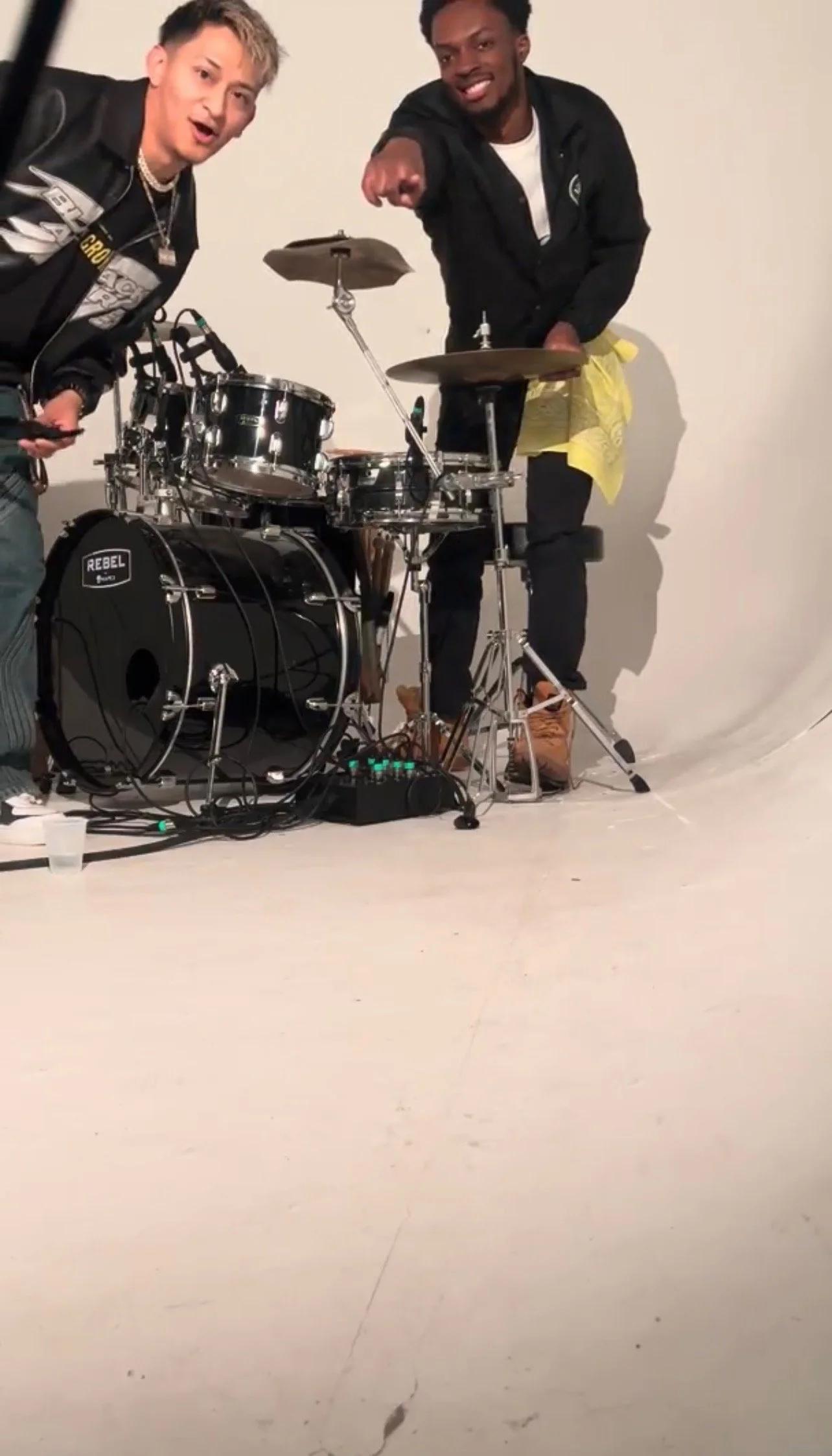
ADU & Chipelo at a live performance and video shoot for “Small Artist Big Talent” in March of 2026
Rather than limiting himself to traditional orchestral scoring, ADU imagines creating music from the same studio environment where he already works, collaborating with other musicians and composers to build music around stories on screen. After recently spending time on a film set for some unrelated work, he found himself imagining the music he could create for what was happening around him. His dream isn't simply to score one movie. He wants to contribute to films he genuinely cares about, projects he can watch years later and proudly say:
“Yo, that’s me!”
PEOPLE DO WANT TO HEAR YOU.
At the end of the interview, Calle Cuatro gave ADU an open floor. No specific question, no topic he needed to address, just an opportunity to say something he felt should be included. His answer is perhaps the best explanation of who ADU is as an artist. After more than ten years working professionally in music, he's watched artists invest enormous amounts of time, money, energy and emotion into singles, albums and performances without knowing whether any of it will lead somewhere. He leaves some advice for anyone who is doing the same: Don't stop.
“People do want to hear you. There is someone out here in this world who is waiting to hear your sound. They just haven’t come across it yet.”
It's a belief that influences how ADU views his own career. If the people who would connect with his music haven't heard it yet, his job is to keep moving until he finds them.
“No one’s going to know me if I don’t get on a plane and go somewhere.”
Even when his body is tired and his mind wants to sleep, ADU describes an internal hunger that keeps pushing him toward music, describing it like a bunny inside of him constantly trying to hop forward. Don't stop. Don't stop. Don't stop. That drive has also made ADU increasingly intentional about who surrounds him. At this point in his career, he wants to build alongside people who don't simply enjoy making music occasionally, but genuinely want to build their lives around it.
“People who love music will last longer than people who just want attention.”
And ADU readily admits that he likes attention too, but…
“…I love music even more.”
For him, surrounding himself with like-minded creatives creates a domino effect. Ambition becomes contagious, work ethic becomes contagious, one person's hunger pushes another person to think bigger. That may also explain why what ADU once expected to be a one-time gig with an energetic artist he met while filming The ADU Show became something much bigger, and why they still work together today. Everything matters. But, as ADU would put it:
5% happens onstage. The other 95% is everything (and everyone) it took to get there.