![Chipelo [Official Website]](http://images.squarespace-cdn.com/content/v1/6317a634d0ce2616830913d9/9a4fb247-6838-442a-83a2-5c9304fdb125/Chipelo+y2k_dropshadow.png?format=1500w)
Being a Salvadoran Artist in the Latin Music Industry
De niño, una de mis cosas favoritas era ver jugar a La Selecta con mi papá.
I don't remember every game, but I do remember always wanting El Salvador to win. It didn't matter who we were playing or whether we were even doing good (we usually weren't lol), whenever La Selecta was on, we watched. Looking back, I think that's where a lot of my pride in being Salvadoran came from. I loved my country before I had ever even been there.
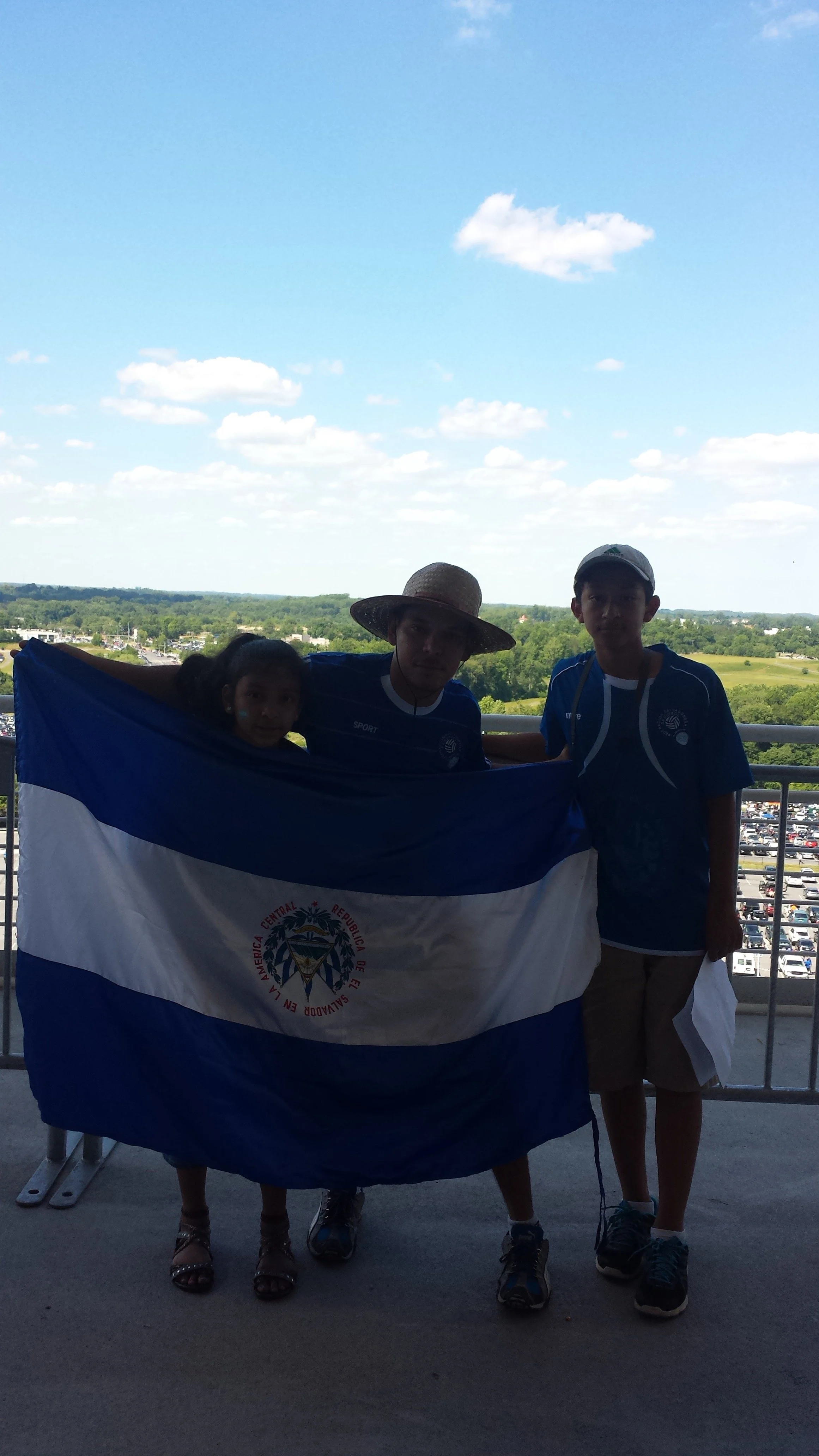
My dad, sister, and I at a game La Selecta played at the DC United stadium when we were kids.
The funny thing is that for most of my life, El Salvador was more of an idea than an actual place. Yeah I grew up eating pupusas, hearing stories from my parents, going to family parties where everyone somehow knew everyone, and being surrounded by Salvadorans here in the DMV, but I hadn’t been there yet. If you grew up around here, you know what I mean. Sometimes it feels like every other person has a cousin from Usulután or San Miguel. We have one of the largest Salvadoran communities in the United States, so I never felt like Salvadorans were rare. If anything, I thought we were just everywhere, haha. I guess it makes sense that people immigrating here would come to where a lot of their pueblo had already moved to.
Then I started paying attention to music.
I never realized how visible other countries were in the industry. Puerto Rico had reggaetón. Colombia had artists coming out left and right, like Shakira, I remember her being my first crush when I was like four years old. Mexico had an entire machine behind its artists. The Dominican Republic had dembow. Everywhere I looked, artists were proudly representing where they came from, and because I grew up listening to so much reggaetón, I ended up learning Puerto Rican slang before I even knew some of the slang my own parents grew up using. I knew what "bellakeo" meant, I knew all these expressions from songs, but I don't ever remember ever hearing Salvadoran slang, unless it was in cumbia. I don't remember ever hearing artists proudly saying they were Salvadoran, because we weren’t mainstream. Puerto Rico is cool, they've given us some of the greatest artists ever yeah, but I just always wondered why everybody else's flag seemed to have a seat at the table except ours.
The first time I actually went to El Salvador wasn't until 2021. My grandpa had gotten sick, so my family wanted to visit him, and it was my first time stepping foot in the country I'd been talking about my whole life. The first thing I noticed was the heat. This was no Maryland summer heat, this was that having to shower after every time you went outside. I don't think I stopped sweating the entire trip. But after a few days, I started imagining something I had never thought about before. I could picture a completely different version of my life. What if I had grown up here? Same parents, same last name, same personality, but I would've gone to different schools, had different friends, listened to different music, probably played soccer every afternoon, and maybe never would've ended up making music in the first place. Would I even still be the same core person I am now? I like to think I would be. I taught myself how to play music then, maybe I would’ve still figured it out here. It made me appreciate the sacrifices my parents made to come here, but it also made me realize something about myself. I'm Salvadoran yes, but I'm also American. I grew up here. I think in English and I speak it faster than Spanish (but tbh I stutter in both languages either way). For a while I felt like I had to choose one identity or the other, but now I realize my music exists because of both. If I had grown up in El Salvador, I probably wouldn't sound like me. Slowly that influence has been seeping more into my music.
That realization made me want to lean into my culture even more. I remember releasing one of my songs and using Salvadoran slang in it. Someone I knew in the industry, and who I respected at the time, suggested I take it out. From his perspective, he had seen Salvadoran artists get further by blending into bigger scenes, he had seen people hang around Puerto Rican artists, adopt that culture, and eventually find opportunities through those connections. That’s how one of his friends made it big onto Rauw’s radar. I saw where he was coming from, but I didn’t think he was right. Why would I hide the one thing that makes me different? If people already know what a Puerto Rican artist sounds like, why not show them what a Salvadoran one sounds like? I want to be authentic to my people and slowly start incorporating our slang into the mainstream. If Feid can say “que chimba” in all his songs, I can use “cipote” and “vos” and “pisar” as well.
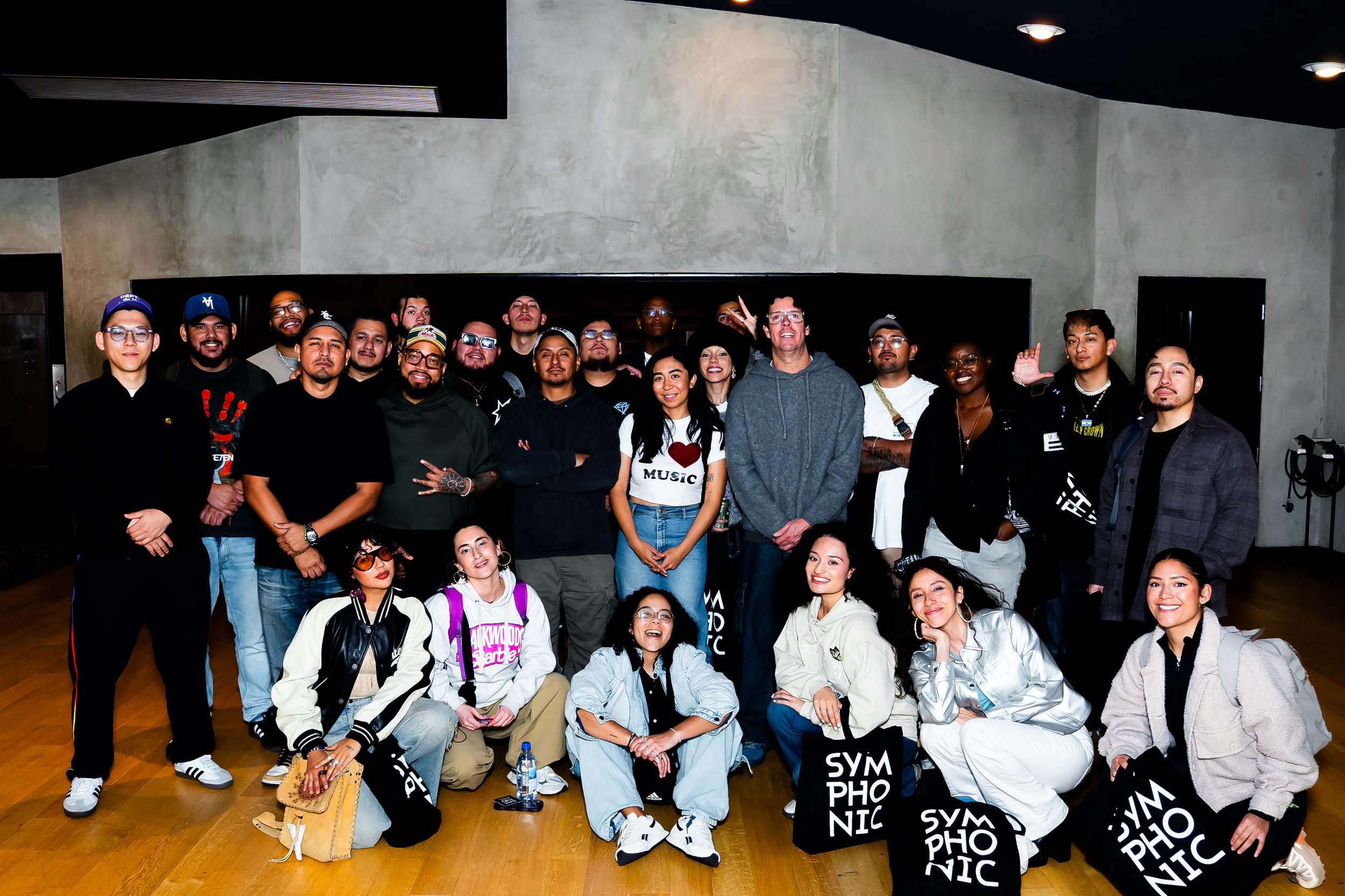
Everyone on the last of day of Luminary Sounds’ Los Angeles music camp. In here the Salvadorans are Ninesoul, BECCA, Madd Maxx, Marvin Garcia, and myself.
As I've gotten deeper into music, I've slowly started finding more Salvadorans doing incredible work. My engineer, Mad Maxx, started his own label called Luminary Sounds. He’s worked with Fuerza Regida, FUEGO, and a bunch of other big name artists. Marvin Garcia, who I finally met in Los Angeles after years of following each other's work online, is doing big things in music publishing, sync, and event production and he has a deep commitment to empowering artists and building community. NineSoul is a producer who's landed placements with Eladio Carrión who I also met in Los Angeles. Every time I meet another Salvadoran in music, it almost feels like finding a rare Pokémon. Puerto Ricans have Puerto Rico, Colombians have Medellín, Mexicans have one of the biggest music industries in the world. Those places have the ecosystems where producers know artists, artists know managers, managers know promoters, etc, everyone is connecting as is “in”. Salvadorans are still building that. We don't really have a giant network to plug into yet, especially in urbano, but I think now that El Salvador isn’t plagued by gangs, there is now a space for the music industry to grow there. I actually think it's an advantage though. There aren't fifty Salvadoran reggaetón artists fighting for the same lane, there aren't ten Salvadoran superstars already doing exactly what I want to do. The lane is still wide open for me. For years, when people heard "El Salvador," the conversation was almost always about gangs or violence, but today the country is changing. More people are visiting, investing, curious about what El Salvador has to offer beyond the beaches. I think music is going to be part of that next chapter, and I want to be part of the generation that pioneers it. One day San Salvador will be a music hub for Central America the way Medellín was and maybe a kid growing up in Maryland or Los Angeles won't have to wonder why nobody from their country is making the kind of music they love because there will already be dozens of artists they can look up to. All the people I’ve met are already doing it, and I know we’re on our way to blowing up. I think the next latin superstar will be from Central America, maybe it’ll be me, maybe it won’t, but I’m excited for our future.